- Articles
- Travel and World Cuisines
- Korean cuisine: kimchi, bibimbap, bulgogi, and other flavors you will love
Korean cuisine: kimchi, bibimbap, bulgogi, and other flavors you will love

Korean Cuisine: Harmony of Flavors and Traditions
Korean cuisine is based on a simple yet perfectly thought-out philosophy: balance. Each meal combines five basic tastes, sweet, salty, sour, bitter, and spicy, while also paying attention to contrasts in temperature and texture. It's not just about eating, but about the overall experience.
Typical ingredients include chili paste gochujang, soybean paste doenjang, sesame oil, garlic, and spring onions. Fermented ingredients, seasonal vegetables, rice, and quality meat also play a crucial role. Koreans believe that food should have a positive effect not only on the taste buds but also on health.
Dishes are often served with several small side dishes called banchan, which are placed in the center of the table and shared. Even simple homemade meals thus appear rich and festive.
Kimchi: the foundation of Korean cuisine and every table
Kimchi is not just a side dish, but an everyday part of Korean life. It is most commonly made from Chinese cabbage, which is salted, seasoned with gochugaru chili flakes, garlic, ginger, and fish sauce, and then left to ferment. This process gives it a distinctive, slightly sour and spicy flavor.
There are hundreds of variations depending on the region and season, from milder versions without chili to very spicy ones. Kimchi is served on its own, but it is also used as a base for soups, fried rice, or savory pancakes. Its versatility is what makes it one of the pillars of Korean cuisine.

Bibimbap: a bowl full of colors
Bibimbap is at first glance a simple dish, but it hides a thoughtful concept. Individual ingredients are arranged separately in a bowl of rice, sautéed vegetables, meat, sprouts, mushrooms, and egg. Each ingredient is prepared separately to preserve its flavor.
Only before eating is everything mixed with gochujang chili paste. The result is a balanced meal that combines different textures and flavors in one bite. Bibimbap has many variations, including vegetarian ones, and is often considered the ideal "comfort food."


Beef Bibimbap

Bibimbap with Beef and Vegetables
Bulgogi: marinated meat in a thousand ways
Bulgogi is one of the most well-known Korean meat dishes. Thin slices of beef are marinated in soy sauce, garlic, sugar or pear puree, sesame oil, and pepper. This makes the meat very tender and slightly sweet.
Bulgogi is quickly grilled in a pan or on a grill and is often served with rice and vegetables. Just like with Samgyeopsal, it is common to wrap the meat in lettuce leaves and complement it with sauces. It is an ideal dish for those who are just starting with Korean cuisine, it is flavorful and not too spicy.


Korean Bulgogi with Marinated Beef
Samgyeopsal: Korean grilling as a social ritual
Samgyeopsal is one of the most popular Korean dishes, and also a way of dining. It consists of thicker slices of pork belly, grilled directly at the table on a hot plate or grill. The meat is usually not marinated to highlight its natural flavor and crispy fat.
The cooked pieces are cut with scissors and wrapped in lettuce or perilla leaves along with garlic, grilled onions, rice, and sauces such as ssamjang (a fermented soybean and chili paste). Each bite is assembled by the guests themselves according to their taste.
Samgyeopsal is not just about food, it is a social experience. It belongs to long evenings with friends, sharing, chatting, and slowly savoring. This very atmosphere is the reason why Korean grilling has become popular even outside Korea.


Traditional Korean Grilled Pork Belly Samgyeopsal
Tteokbokki: Korean Street Food
Tteokbokki are rice cakes cooked in a thick, spicy sauce made from gochujang chili paste. It is one of the most typical Korean street food dishes, sold at markets and small bistros.
The sauce is rich, slightly sweet, and distinctly spicy. It is often complemented with fish cakes, boiled eggs, or cheese. Tteokbokki is a simple dish but very intense in flavor, ideal for colder days.


Spicy Korean Rice Cakes (Tteokbokki)
Mandu: Korean Dumplings
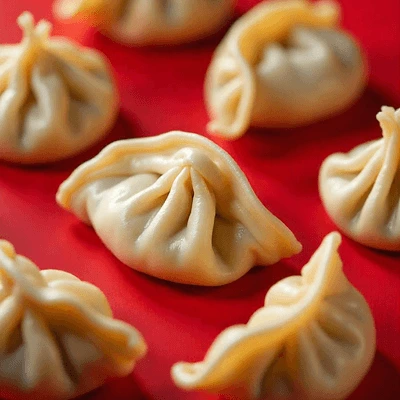
Mandu are Korean dumplings filled with meat, tofu, vegetables, or kimchi. They can be boiled, fried, or steamed and are often served with a simple soy sauce with vinegar.
They can be found as a standalone dish, part of soups, or as a smaller course to share. Thanks to various preparation methods and fillings, mandu are very versatile and popular even outside of Korea.

Japchae: Sweet Potato Noodles
Japchae is made from translucent sweet potato noodles, which are stir-fried with vegetables and meat and seasoned with soy sauce and sesame oil. The flavor is mild, slightly sweet, and very balanced.
It is often served at celebrations and festive occasions, but thanks to its simple preparation, it is also suitable as a quick lunch or dinner.


Japchae with Beef and Vegetables
Korean Cuisine at Home
The good news is that many Korean dishes can easily be prepared at home. Many dishes can be easily adapted to vegetarian or vegan versions, and the ingredients are now commonly available here as well. If you are looking for inspiration to liven up your home cooking, Korea is a great place to start.